
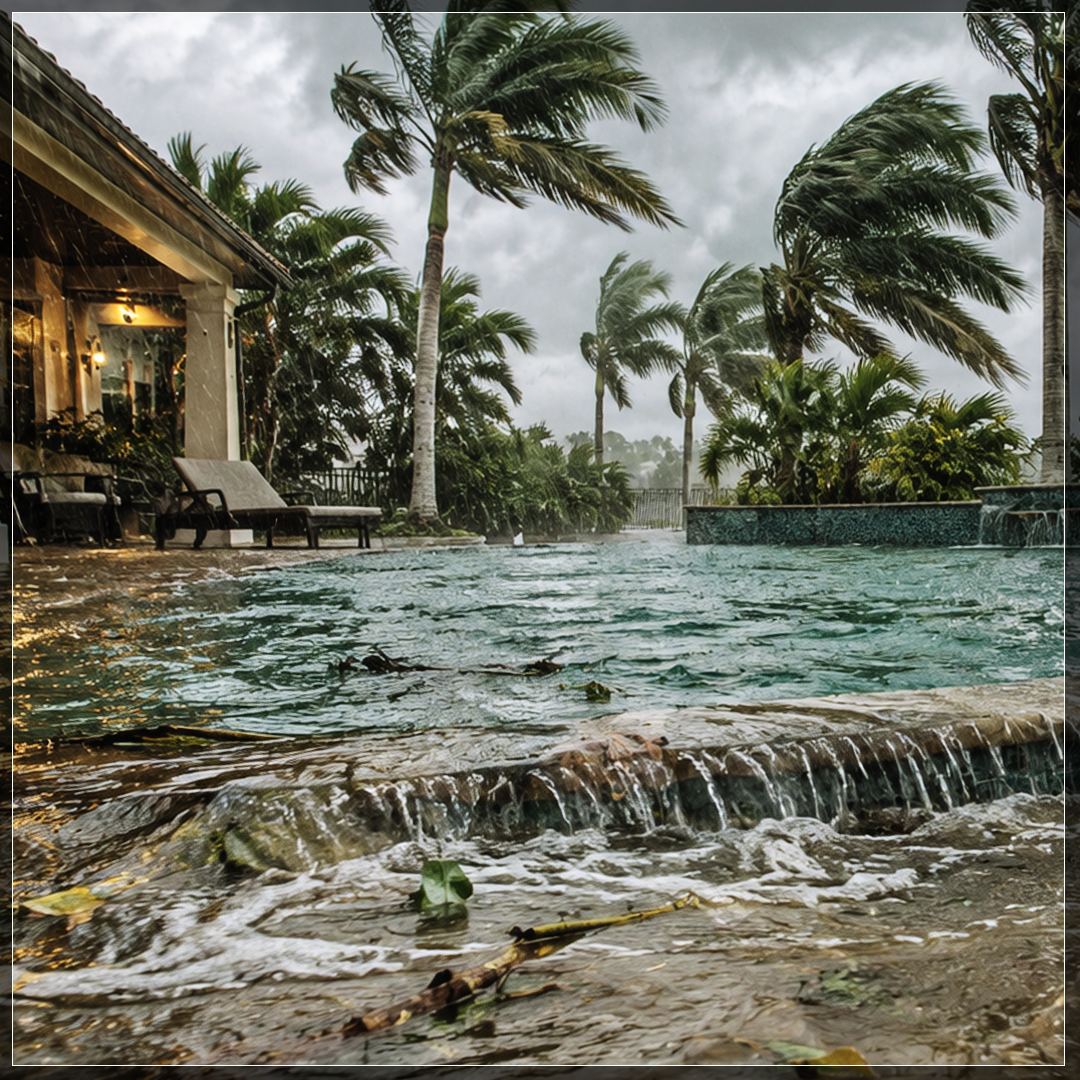
Protecting Your Tampa Bay Pool: Storm & Flood Safety Tips
Emergency Safety Precautions
Rising Floodwater on Equipment Pad:
Cut electrical power immediately at the main circuit breaker. This prevents severe electrocution hazards and stops motor windings from shorting out.
Submerged Pump Motor:
Leave power off and allow 24 to 48 hours of complete air drying. Running wet motor windings creates immediate short-circuiting and mechanical seal damage.
Overflowing In-Ground Pool:
Do NOT drain water while the surrounding ground remains waterlogged. Keeping water in the pool counteracts upward hydrostatic pressure from saturated soil and prevents pool shell floating or popping.
Tripped Breaker or GFCI:
Reset once. If it trips again, keep power off. Repeated breaker tripping indicates an active ground fault or short circuit requiring technician repair.
Detailed Storm Safety & Equipment Guidance
Shut Off Electrical Power Immediately
Respect Hydrostatic Groundwater Pressure
Inspect Before Re-energizing
5-Step Water Cleanup & Recovery Sequence
- Remove Heavy Debris Manually: Use a heavy-duty leaf net to scoop branches, leaves, and mud out of the pool before turning on circulation, preventing plumbing lines from clogging.
- Lower Excess Water to Skimmer Level: Once surrounding ground floodwaters recede and soil begins to dry, lower the water level back to mid-skimmer height using a submersible pump or setting your multiport valve to “waste”.
- Brush Walls & Vacuum to Waste: Thoroughly scrub the pool walls and floor to loosen fine silt and algae. Vacuum heavy sediment directly to “waste” rather than running it through your filter media.
- Rebalance Chemistry & Super-Shock: Storm runoff washes in bacteria, organic debris, and algae-feeding phosphates. Balance total alkalinity and pH first, remove elevated phosphates, and apply a heavy chlorine shock to sanitize the water.
- Filter Continuously: Run your filtration system 24/7 until the water is completely clear, cleaning cartridge filters or backwashing sand/DE filters frequently as trapped flood silt raises operating pressure.
🛠️ Need Expert Post-Storm Repairs in Tampa?

A new pool or a remodeled pool is not just a source of summer refreshment; it's a significant investment that can positively impact your property's value. In this [...]
We have an amazing fall 2023 open house over the weekend, including food, education & prizes! Thank you to the nearly 100 people who stopped by our pool & [...]
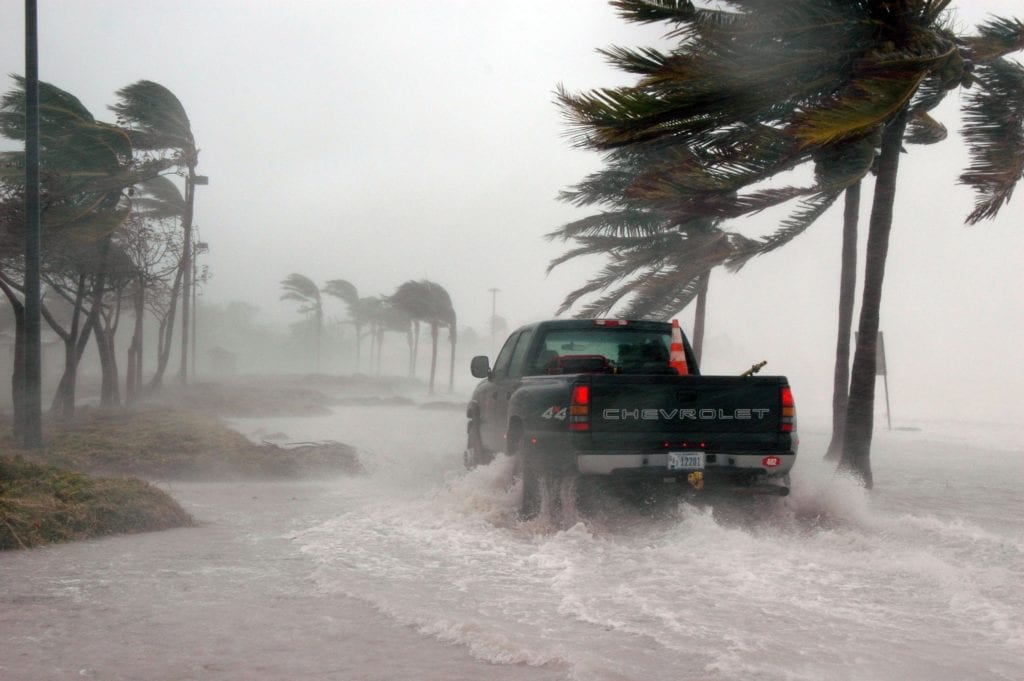
During hurricane season, there is no better time to begin preparing your home and family for what could come our way. As Floridians, we know what kind of [...]